The Importance of Joint Placement in Commercial Concrete to Prevent Cracking
Structural Insight:
Joint placement in commercial concrete controls where cracks occur, preventing random fractures that weaken performance and appearance. Proper spacing, timing, and alignment with load patterns and slab geometry are essential to ensure durability, especially in Louisiana’s climate and soil conditions.
Why do some commercial slabs crack within months while others hold up for decades under heavy traffic? According to commercial concrete services in Baton Rouge, the difference is rarely the concrete mix alone. More often, it comes down to joint placement. In commercial concrete, joints are not optional details. They are engineered control points designed to manage stress. When placed correctly, they control cracking. When ignored or poorly spaced, concrete will still crack. It just cracks where you do not want it to.
For commercial properties across Lafayette, Youngsville, and Baton Rouge, joint design can determine whether a slab performs under forklifts, delivery trucks, and daily foot traffic or becomes a recurring repair issue.
Concrete Will Crack. Joint Placement Decides Where.
The American Concrete Institute explains that concrete shrinks as it cures and dries. This shrinkage creates internal tension. When that tension exceeds the tensile strength of the slab, cracking occurs.
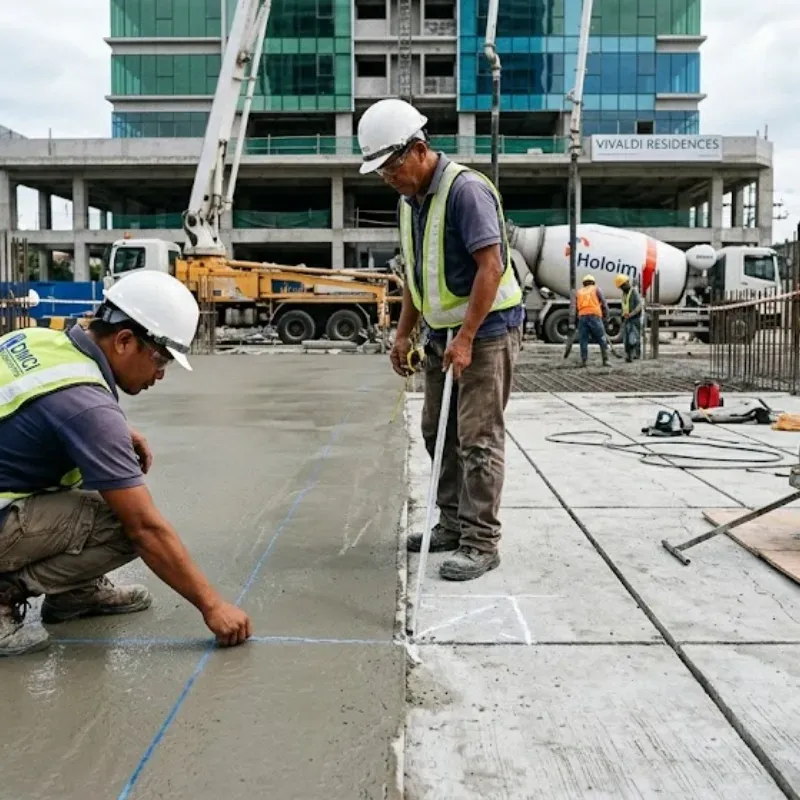
Control joints are intentional weakened planes cut or formed into the slab to guide cracking in a straight, predictable line. Instead of random fractures across high-visibility areas, the slab relieves stress along planned joint lines.
According to our commercial concrete experts, contraction joints in unreinforced concrete slabs in the United States are commonly spaced at approximately 24 to 30 times the slab thickness, although some recommendations permit spacing up to 40 times the thickness. For example, a 5-inch slab should generally have joints spaced no more than 10 to 12 feet apart.
Ignoring those ratios is one of the most common causes of uncontrolled cracking in commercial flatwork.
Why Joint Placement Is More Critical in Commercial Projects
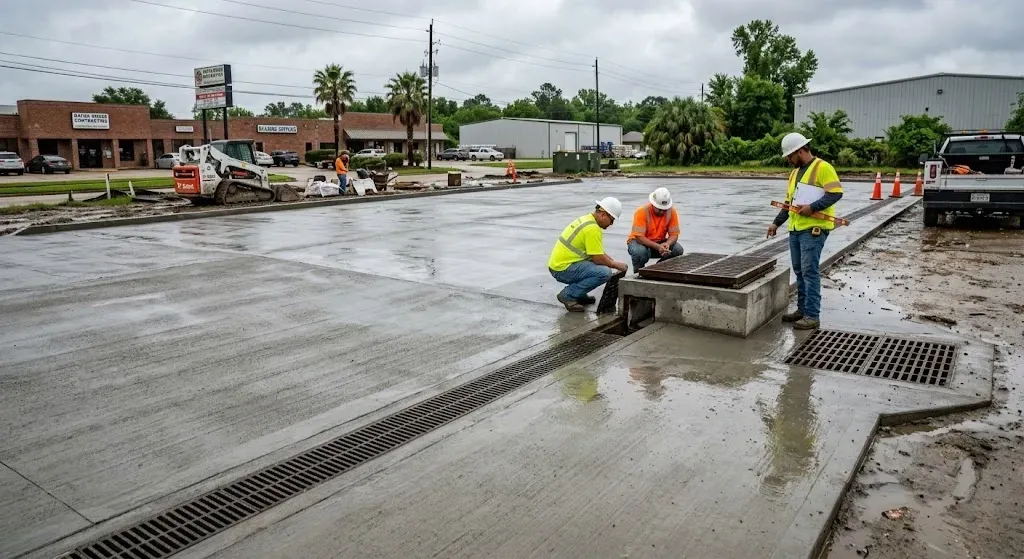
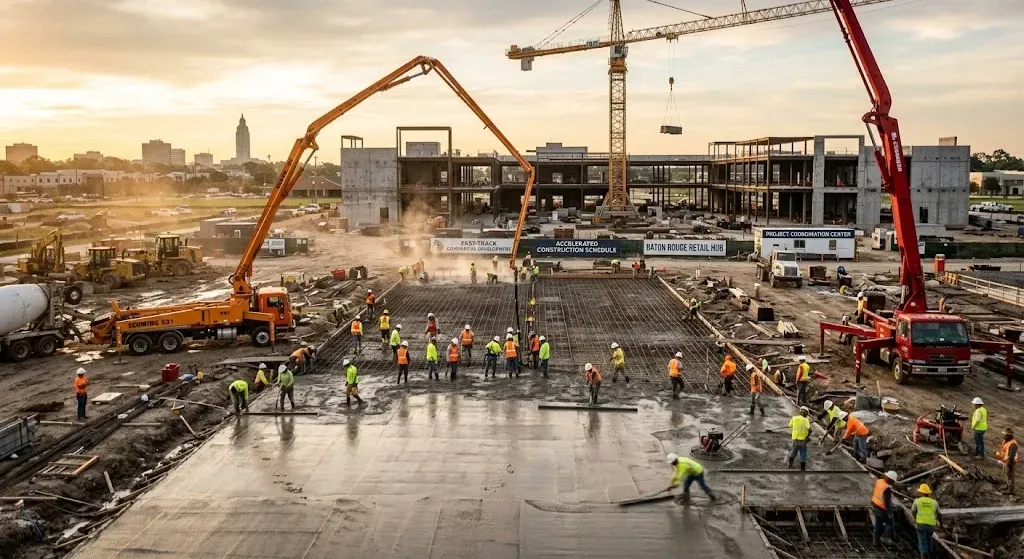
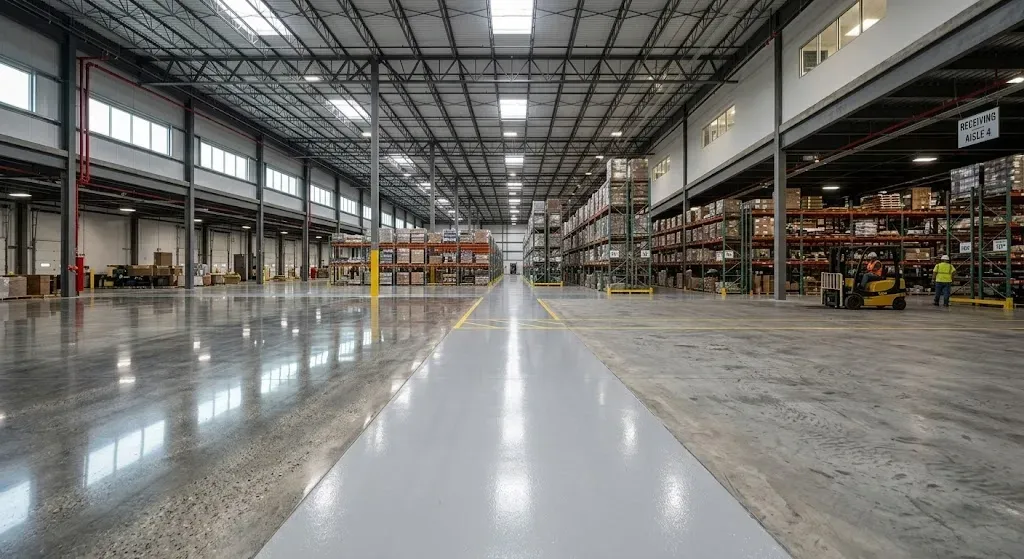
Commercial slabs experience heavier loads than residential surfaces. In Louisiana, that includes restaurant parking lots, retail spaces, industrial facilities, and warehouse floors.
In our work on commercial projects across South Louisiana, we have seen that slabs without properly planned joint grids tend to develop diagonal cracking between high-traffic zones. Once that cracking starts, repairs become cosmetic rather than preventative.
Heavy loads create flexural stress. When joints are spaced too far apart, the slab cannot distribute stress efficiently. The result is structural cracking that weakens performance and damages appearance.
Joint placement is not simply about spacing. It is about understanding traffic flow, load concentration, and slab geometry.
The Louisiana Climate Factor
South Louisiana presents additional challenges.
High humidity slows curing. Sudden temperature shifts between hot days and cooler nights create expansion and contraction cycles. Heavy rainfall affects subgrade moisture conditions.
According to the Federal Highway Administration, evaporation of moisture from concrete surfaces during curing is directly influenced by environmental conditions such as air temperature, wind speed, and relative humidity, which can affect the curing process and the quality of the concrete.
In humid climates like Acadiana and Baton Rouge, improper curing combined with poor joint timing can lead to early shrinkage cracks before saw cuts are even made.
Timing matters. Control joints must be cut at the right moment. Too early and aggregate may ravel. Too late and cracks may already form.
Joint placement in Louisiana requires attention to weather, soil moisture, and curing practices.
Common Joint Placement Mistakes in Commercial Work
Most joint failures are not caused by bad concrete. They are caused by planning oversights.
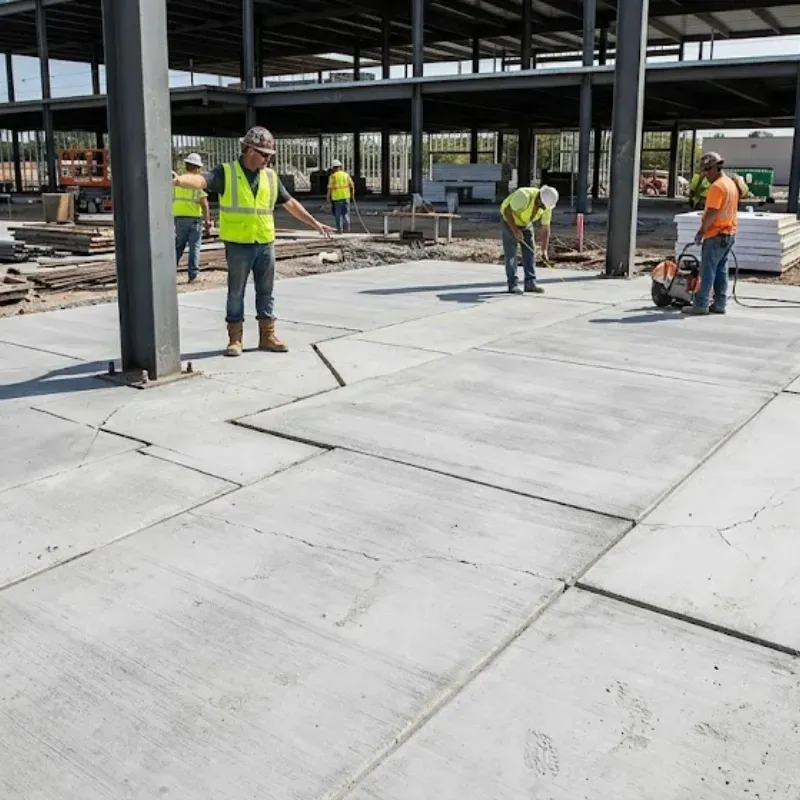
The most frequent issues we encounter include:
- Joints spaced too far apart
- Joints not aligned with structural columns or building corners
- Irregular panel shapes that create stress concentration
- Saw cuts made too shallow to function properly
- Delayed cutting after concrete has already begun cracking
Commercial slabs should be divided into square or near-square panels whenever possible. Long narrow rectangles increase the likelihood of uncontrolled cracking.
These technical details may seem minor during construction. They are not minor years later when cracks widen under traffic.
Fewer Joints vs. Controlled Performance
Some property owners resist more joint lines because they prefer a cleaner visual appearance. That preference is understandable.
However, fewer joints mean larger panels. Larger panels increase shrinkage stress and the likelihood of random cracking.
More joints create more lines in the slab, but they also reduce panel size and improve crack control. For commercial projects that prioritize durability over aesthetics, properly spaced joints are the smarter choice.
There is no scenario where eliminating control joints improves slab longevity.
Soil Preparation and Reinforcement Still Matter
Joint placement alone cannot compensate for poor subgrade preparation.
In Louisiana, soil conditions vary between sandy areas, clay-heavy regions, and reclaimed fill. Improper compaction leads to differential settlement. That settlement creates stress that even well-placed joints cannot fully manage.
Using 3000 PSI or higher concrete mixes with proper reinforcement increases overall durability, but reinforcement does not prevent shrinkage cracking. To learn more, review
choosing the right concrete mix for Baton Rouge home and commercial projects
Joints remain the primary mechanism for crack control.
Real-World Performance Over Theory
Based on experience working on commercial flatwork across Lafayette and Baton Rouge, slabs that follow joint spacing guidelines consistently perform better long term.
We have revisited projects years after completion and observed minimal uncontrolled cracking where joint grids were properly designed and cut on schedule.
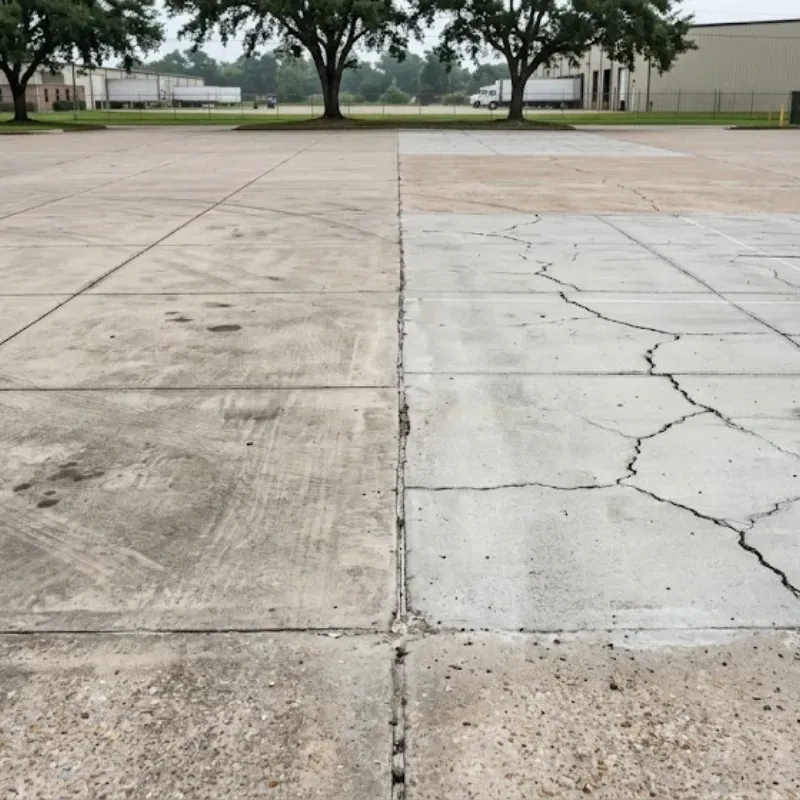
Conversely, slabs rushed without thoughtful joint planning often show irregular cracking within the first year.
Joint placement may not be visible once a property opens. But it becomes very visible when it is done wrong.
Strategic planning helps. Review strategic concrete project planning to see how concrete lasts longer in Baton Rouge.
Takeaway for Commercial Property Owners
If you are planning a commercial concrete project in South Louisiana, do not treat joint placement as an afterthought.
Before pouring, confirm:
- Joint spacing matches slab thickness ratios.
- Panels are square or close to square.
- Saw cuts will be made at the proper depth and timing.
- Subgrade is properly compacted.
- Reinforcement aligns with load expectations.
Concrete cracking cannot be eliminated. It can only be controlled.
In commercial construction, controlled cracking means structural reliability, reduced maintenance costs, and a professional appearance that holds up under daily use.
It is best to consult a concrete professional to properly evaluate site conditions, determine appropriate joint spacing and reinforcement, select the right mix design, and implement curing methods that minimize shrinkage and long-term cracking.