The Benefits of Using Concrete for Commercial Parking Structures in Baton Rouge
BOTTOM LINE: Concrete is not the flashiest topic, but when it comes to commercial parking structures in Baton Rouge, it is one of the most consequential decisions a property owner or developer will make. The right material choice upfront can mean the difference between a structure that holds up for decades and one that starts showing problems within a few years of opening.
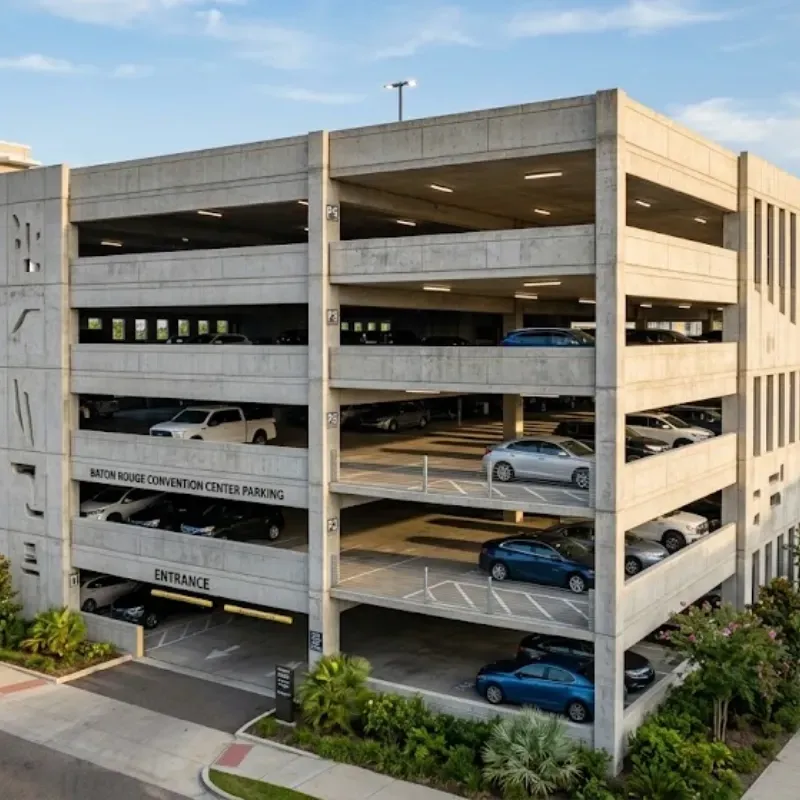
If you are planning a commercial parking structure in Baton Rouge — whether it is a standalone garage, a surface lot for a retail development, or a multi-level structure for an office complex — the material question matters more here than it does in most other cities. Louisiana’s climate is not forgiving. The combination of heat, humidity, heavy rainfall, and the occasional threat of flooding puts built structures under continuous stress. Concrete, when properly specified and installed, handles that stress better than most alternatives.
Here is a straight look at why concrete is the go-to choice for commercial parking structures in this region, and what property owners and developers should know before breaking ground.
It Is Built for Louisiana’s Climate
Baton Rouge summers are brutal. Heat indices regularly push past 100 degrees, and the city averages more than 60 inches of rain per year — well above the national average. For a parking structure that sits exposed to all of that year-round, material durability is not a nice-to-have. t is one of the most important performance factors.
Concrete performs exceptionally well in this environment because it does not corrode, does not absorb water the way porous materials do, and does not expand and contract with temperature changes the way asphalt does. When it comes to commercial concrete in Baton Rouge, this climate resilience is the first reason contractors and developers reach for concrete before anything else.
Asphalt, by comparison, softens in intense heat and can develop ruts under heavy vehicle loads in summer conditions. Baton Rouge summers are exactly the kind of environment where that limitation shows up quickly. Concrete maintains its structural integrity and surface hardness regardless of temperature, which means a well-built concrete parking structure performs consistently whether it is July or January.
The Long-Term Cost Argument Is Hard to Beat
Concrete costs more upfront than asphalt. That is true, and it would be misleading to pretend otherwise. But when you look at the full lifecycle of a commercial parking structure, the math tends to flip. A concrete surface in a properly built structure can last 30 to 50 years with routine maintenance. Asphalt typically requires resurfacing every 10 to 15 years and sealcoating every three to five years, and in a climate like Baton Rouge’s, that timeline compresses further.
For commercial property owners thinking about long-term operating costs and total cost of ownership, concrete is almost always the more economical choice over the life of the structure. Less frequent repairs, lower ongoing maintenance costs, and a longer useful life before major rehabilitation is needed — those savings accumulate significantly over 20 or 30 years of operation.
Structural Strength That Handles Real-World Load
A commercial parking structure is not just a flat surface. It is a structure that bears the weight of thousands of vehicles over its lifetime, handles dynamic loads from vehicles in motion, and in a multi-level structure, must transfer all of that load safely to the foundation. Concrete’s compressive strength makes it the standard material for this application precisely because it handles those demands reliably.
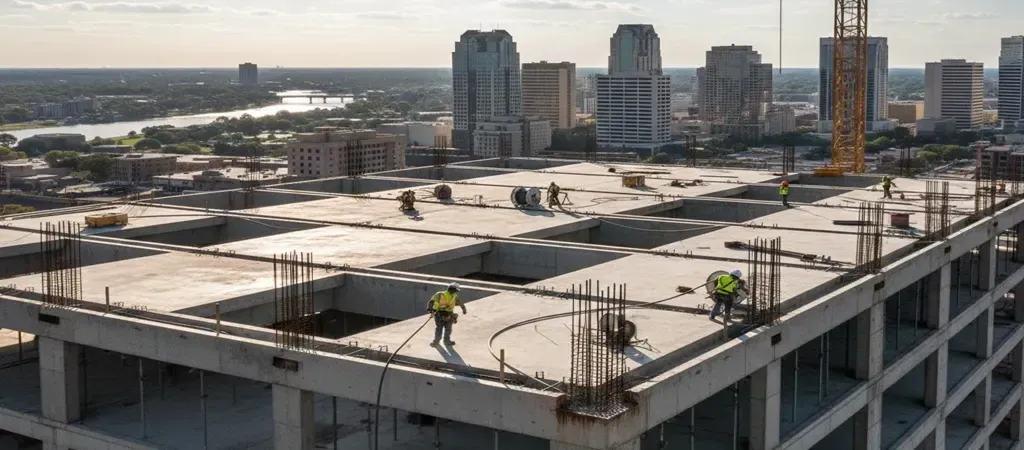
Reinforced concrete — concrete with properly designed and placed steel reinforcement — adds tensile strength to concrete’s natural compressive strength, creating a material that can handle both the downward load of parked vehicles and the dynamic stresses of traffic movement through the structure. At Baton Rouge Concrete Experts, our commercial work follows structural specifications designed for the actual loads and conditions a Baton Rouge parking structure will face — not generic specs that may or may not fit the local environment.
Post-tensioned concrete, which is common in multi-level parking garages, takes this a step further by using high-strength steel tendons that are tensioned after the concrete has cured. This technique allows for thinner slabs, longer spans, and reduced cracking — a meaningful benefit in a climate where moisture infiltration through cracks is a real long-term concern.
Lower Maintenance Means Less Disruption to Your Business
Nobody wants to close a parking structure for a week of maintenance.
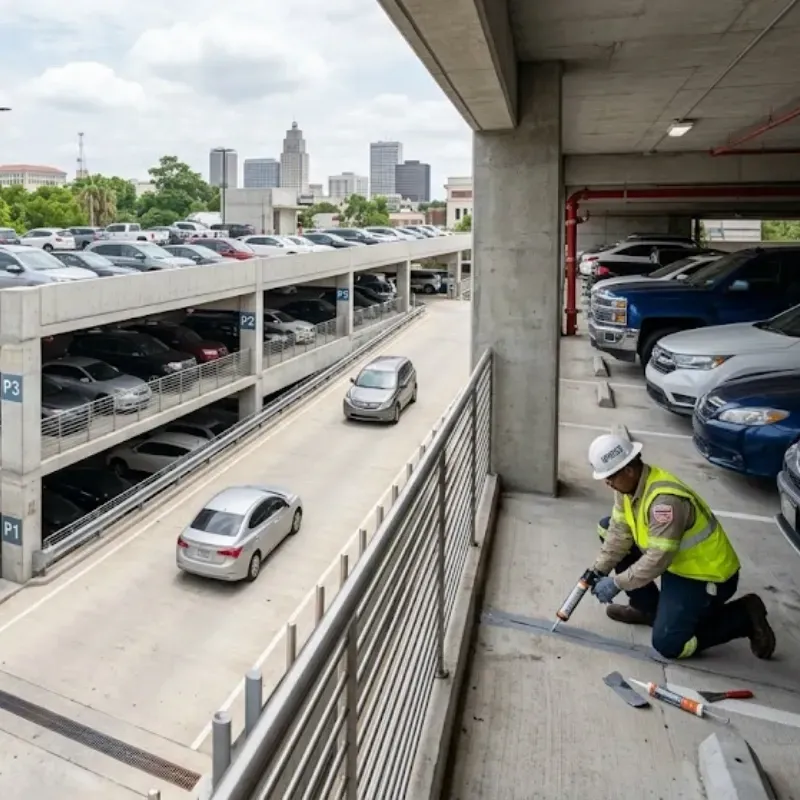
For a retail center, a hospital, or an office complex, a parking structure that needs frequent repairs is a real operational headache — and a source of frustration for tenants and customers alike. Concrete’s lower maintenance requirements mean fewer closures, less disruption, and a structure that does its job quietly in the background rather than demanding attention.
That said, concrete is not maintenance-free. Joint sealing, surface sealing in high-traffic areas, and periodic inspection for cracking are all part of responsible ownership of a concrete parking structure.
Understanding common concrete issues in Baton Rouge structures — from surface spalling to rebar corrosion in high-moisture environments — helps property owners stay ahead of problems before they become expensive. Catching a small crack early costs a fraction of what it costs to address a structural issue that has been allowed to develop over several years.
Safety and Visibility
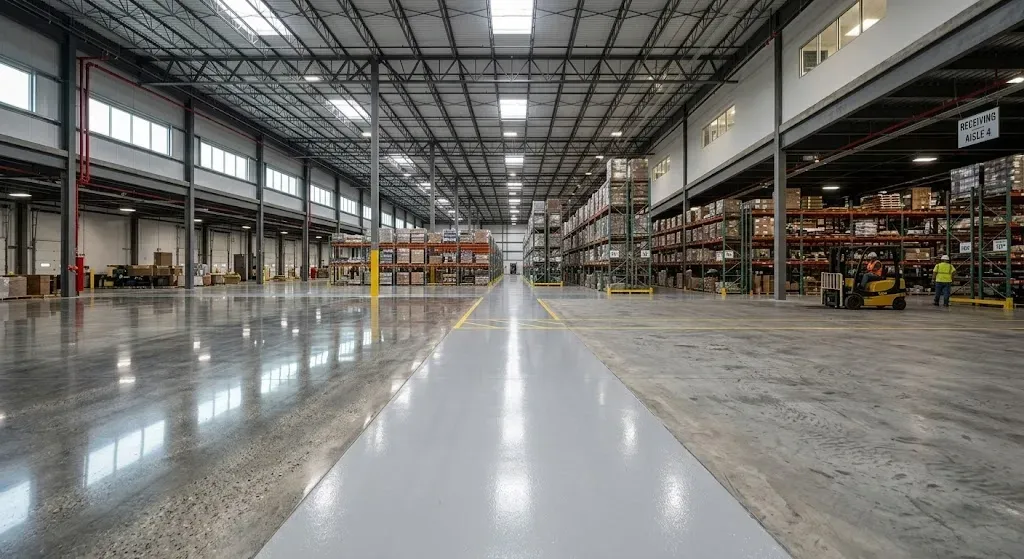
This one does not always come up in the material discussion, but it matters. Concrete’s light color naturally reflects more light than asphalt, which means better visibility in parking structures — especially in covered or enclosed areas where lighting has to work harder. For a property owner thinking about the safety and experience of people using the structure after dark, that reflectivity is a practical benefit that reduces lighting costs and improves the overall feel of the space.
Concrete also provides better traction in wet conditions than polished or smooth alternative surfaces. In a city that gets as much rain as Baton Rouge, wet-weather traction is not a minor consideration. A surface that drivers and pedestrians can navigate safely in a downpour reduces liability exposure and simply makes the structure safer to use.
Getting the Project Right from the Start
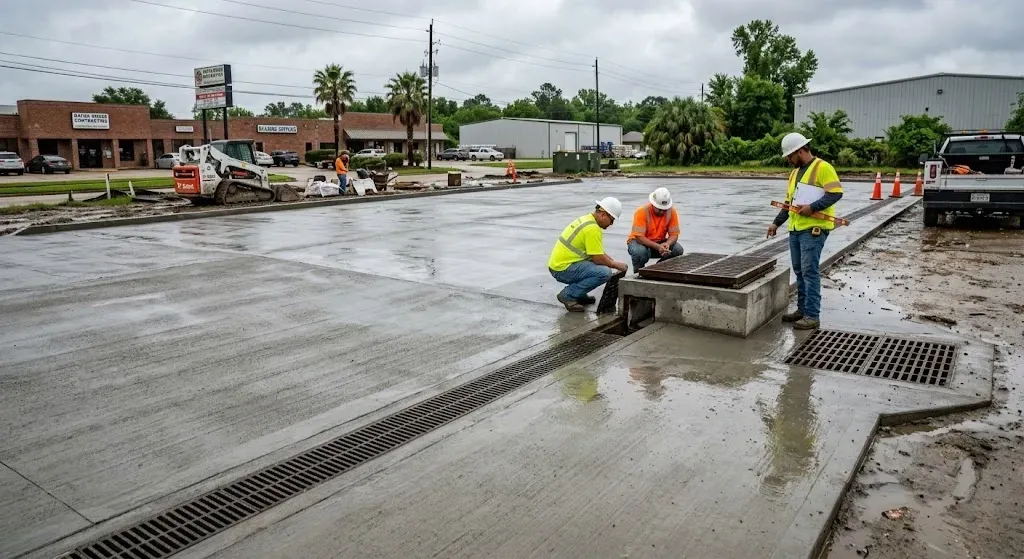
The benefits of concrete only materialize when the project is specified and installed correctly. The mix design, the reinforcement layout, the joint spacing, the curing process, and the drainage design all affect how a concrete parking structure performs over its lifetime. Cutting corners on any of these — which is exactly what happens when a project is awarded on price alone — produces a structure that will underperform and cost more in repairs than the savings on the original contract.
If you are working through the planning and budgeting process for a commercial parking structure, understanding the cost drivers is a useful starting point. Our breakdown of concrete pricing in Baton Rouge covers what affects project cost and how to evaluate proposals in a way that goes beyond the bottom-line number. The cheapest bid is rarely the best value in commercial concrete work, and knowing why helps you ask better questions before you sign a contract.
Concrete parking structures are a long-term investment. Treating them that way — from material selection through contractor selection through ongoing maintenance — is what produces a structure that performs the way it should for the people who use it every day.