Key Differences Between Residential and Commercial Concrete in Baton Rouge
Decision Snapshot:
Residential and commercial concrete in Baton Rouge differ significantly in load capacity, mix strength, reinforcement, and construction standards, making them unsuitable for interchangeable use. Matching the design to actual usage and local conditions is essential to prevent premature failure, costly repairs, and inspection issues.
Are residential and commercial concrete really that different, or is concrete just concrete no matter where it is poured?
That question matters more than most property owners realize. What looks like the same gray surface can perform very differently depending on how it is designed, reinforced, and placed. In our work across the region, we have seen projects succeed or fail based on this single misunderstanding. To most property owners, concrete is just a slab, a driveway, or a foundation. In practice, residential and
commercial concrete services in Baton Rouge are two very different disciplines. Those differences matter even more because of local soil conditions, climate, and building codes.
Design Loads and Structural Demands
The most important difference between residential and commercial concrete is load expectation.
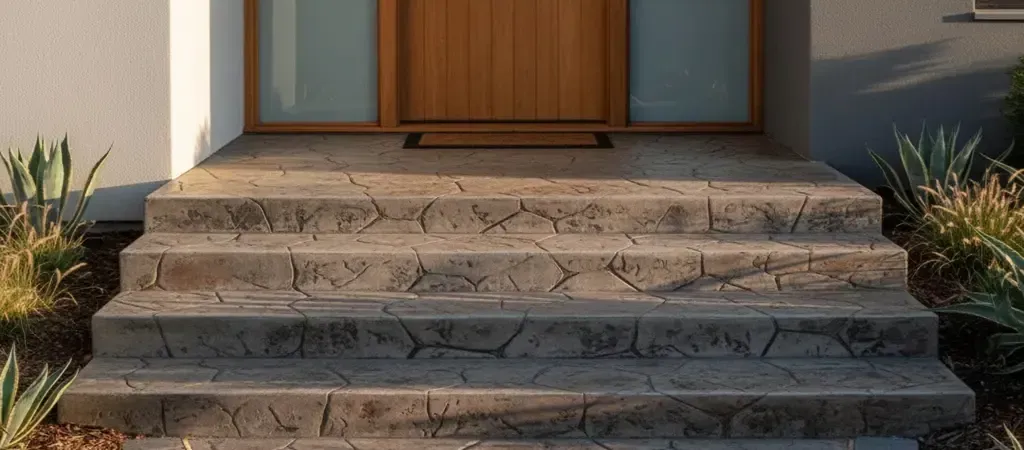
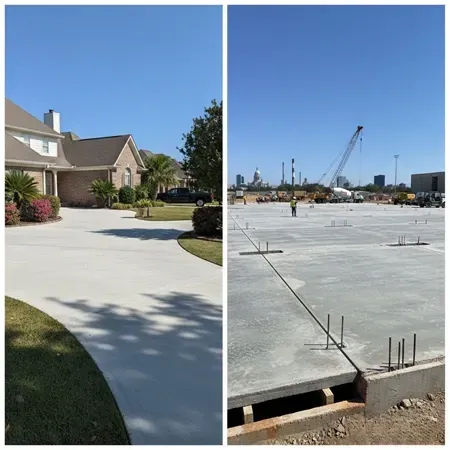
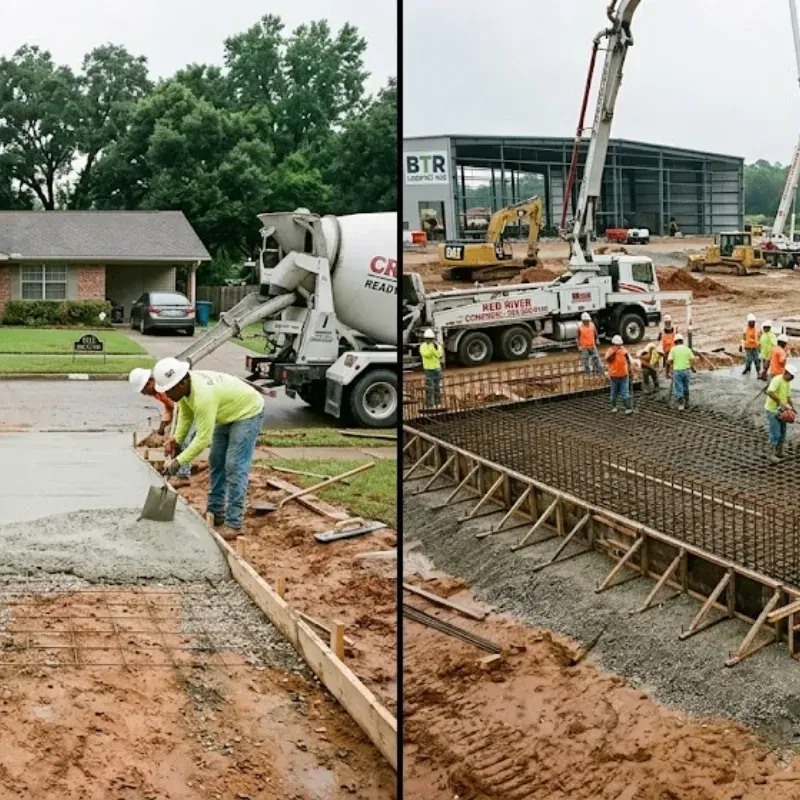
Residential slabs are designed for lighter, predictable loads. Passenger vehicles, foot traffic, patio furniture, and typical household use drive the design. Thickness, reinforcement, and mix design reflect those limits.
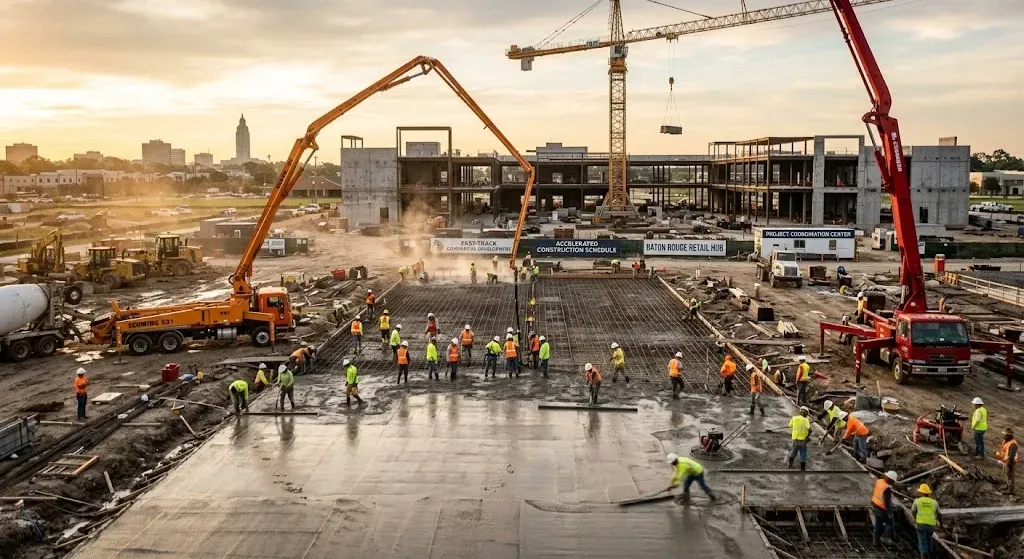
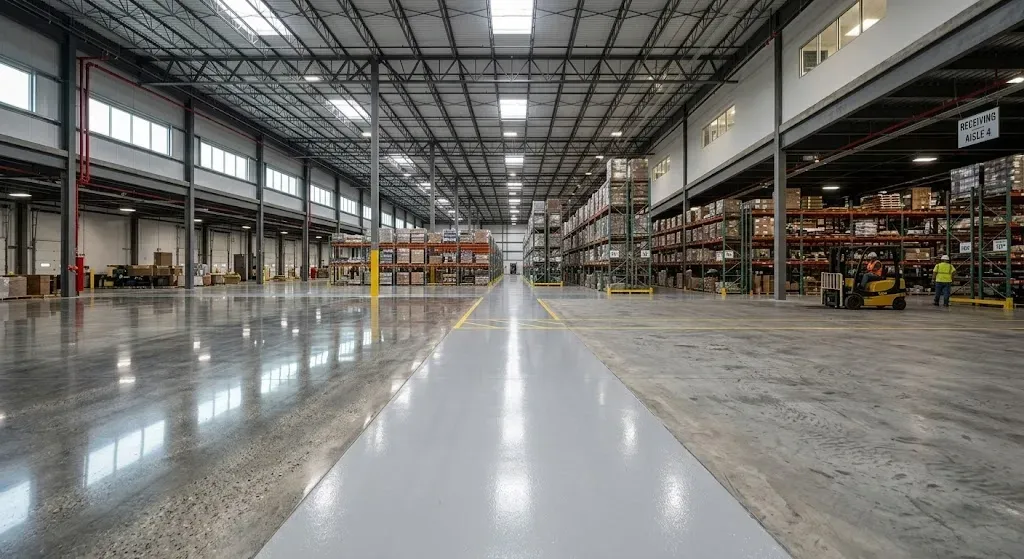
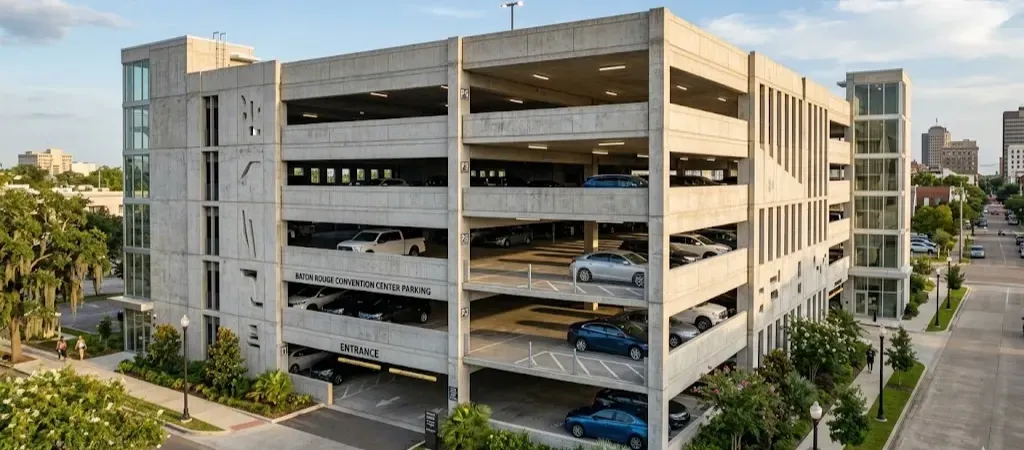
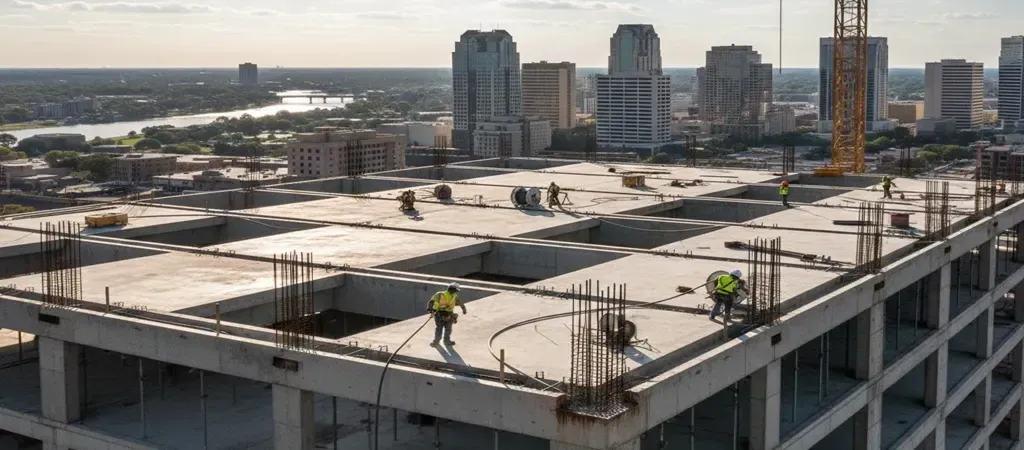
Commercial concrete must handle heavier and more complex loads. Delivery trucks, forklifts, pallet racks, and continuous foot traffic all affect how the slab is engineered. In Baton Rouge, this often means thicker sections, tighter reinforcement spacing, and higher compressive-strength concrete.
Based on the experience of
our expert concrete contractors, one of the most common mistakes is assuming that a residential driveway design works for a light commercial parking area. It usually does not. Underdesigned slabs crack early, settle unevenly, and fail inspections.
Concrete Mix and Strength Requirements
Residential projects typically use 3000 PSI concrete for driveways, patios, and sidewalks. That strength performs well for standard home use when installed correctly.
Commercial projects often require 3500 to 4000 PSI or higher, depending on use and code requirements. Higher-strength mixes reduce long-term cracking and increase durability under repeated loading.
The tradeoff is workability. Higher PSI mixes are stiffer, harder to finish, and less forgiving.
Crews without experience in commercial flatwork often struggle with placement timing and finishing quality. To learn more about the importance of concrete mix, explore why choosing the right concrete mix matters for Baton Rouge home and commercial projects.
Subgrade Preparation and Soil Conditions
In South Louisiana, soil preparation is often more important than the concrete itself.
Residential projects usually involve shallow excavation, compacted fill, and a thin base layer. When done properly, this performs well for decades.
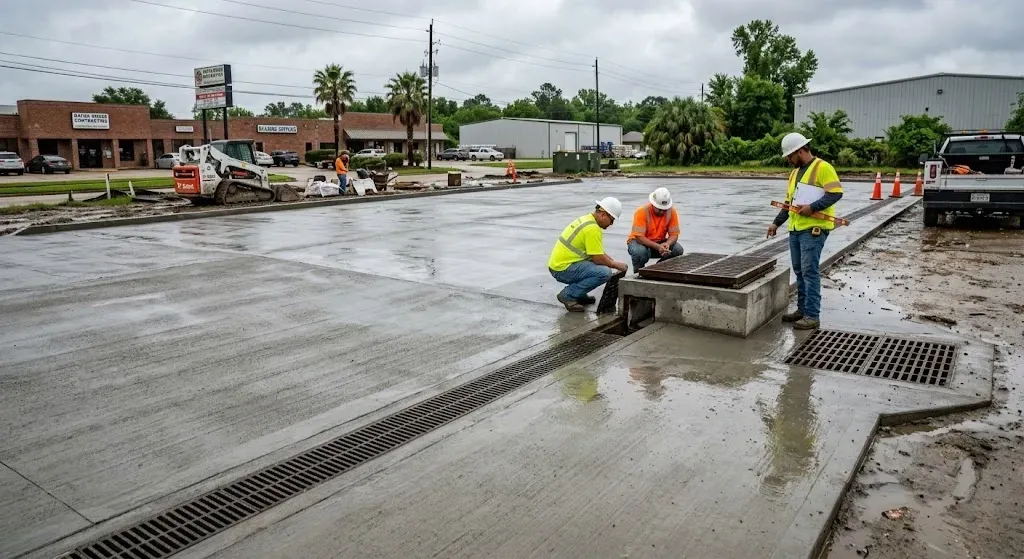
Commercial slabs require engineered subgrades. Proof rolling, soil stabilization, and thicker base courses are common. In Baton Rouge, expansive clay soils increase the risk of settlement and heaving if preparation is rushed.
In our work, we have seen commercial slabs fail not because of bad concrete but because the base was not properly compacted or moisture-controlled. Residential standards rarely provide enough protection for large commercial surfaces.
Reinforcement and Crack Control
Residential slabs often use welded wire mesh or light rebar grids. Joint spacing is wider, and minor cracking is usually considered acceptable.
Commercial slabs rely heavily on reinforcement strategy. Rebar placement, dowel systems, joint layout, and fiber reinforcement all play a role.
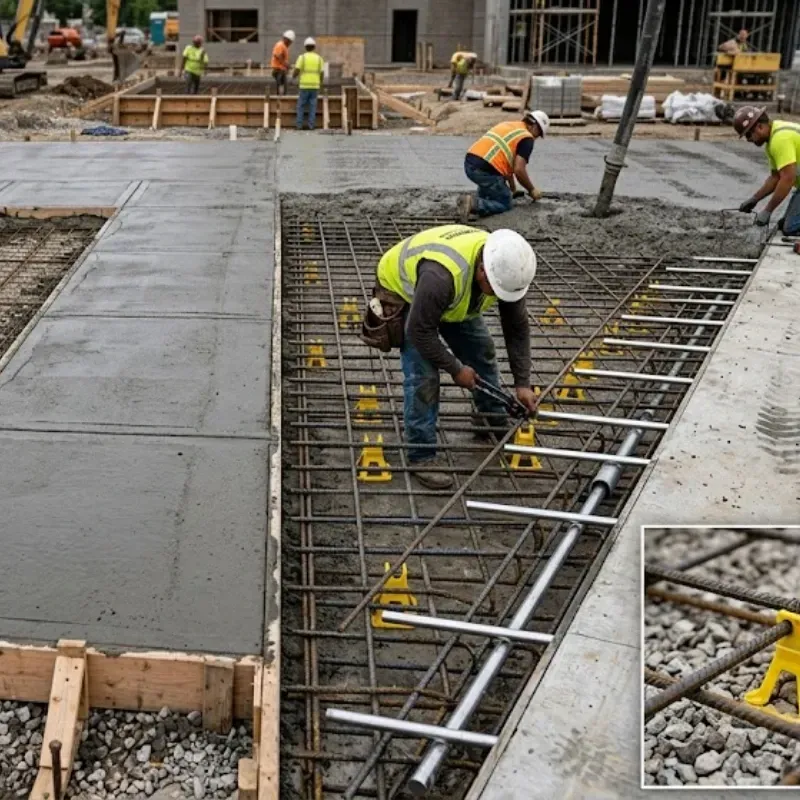
Crack control is not cosmetic. It affects forklift safety, drainage, and long-term maintenance costs.
One frequent mistake is improper rebar placement. Steel placed too low in the slab provides little benefit.
Based on field experience, reinforcement location is more critical in commercial work than the amount of steel used.
Finishing Tolerances and Flatness
Residential finishing focuses on appearance and drainage. Slight surface variation is usually acceptable.
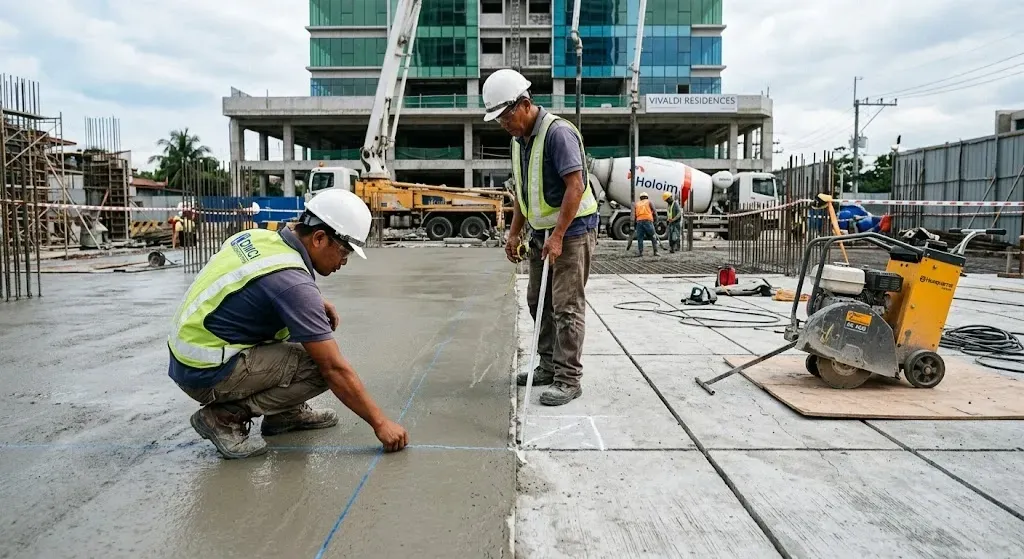
Commercial concrete must meet strict flatness and levelness tolerances. Warehouse floors, retail spaces, and kitchens require measured FF and FL values to meet equipment and safety requirements.
The tradeoff is time. Commercial finishing demands tighter scheduling, more manpower, and better sequencing. Rushing placement almost always shows later.
Code, Inspections, and Permitting
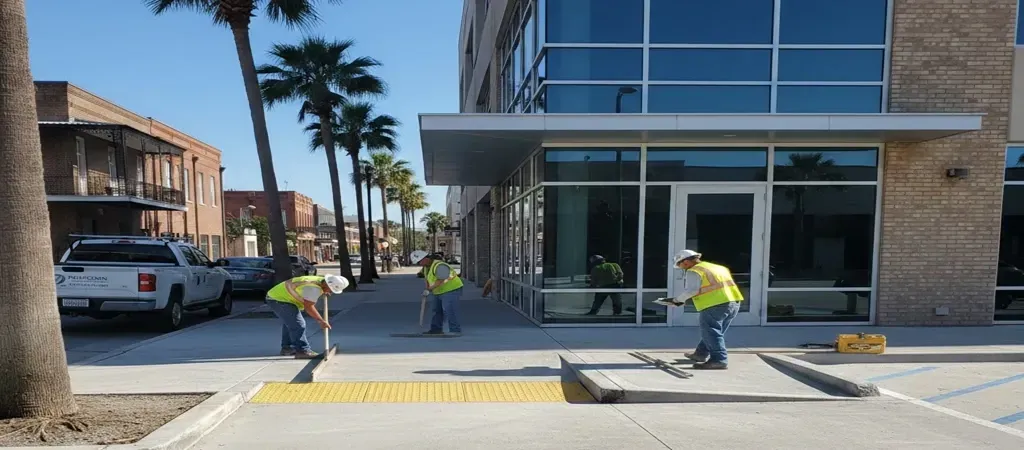
Residential concrete follows local building codes and inspections, but commercial work adds another layer.
Structural engineers, third-party inspectors, and city reviewers are usually involved. Mix tickets, testing cylinders, and inspection reports are required. In Baton Rouge, commercial permitting timelines can affect scheduling as much as construction itself.
Choosing a contractor unfamiliar with commercial inspection processes is a common and costly mistake. Failed inspections delay occupancy and lead to expensive rework.
Longevity, Maintenance, and Cost Expectations
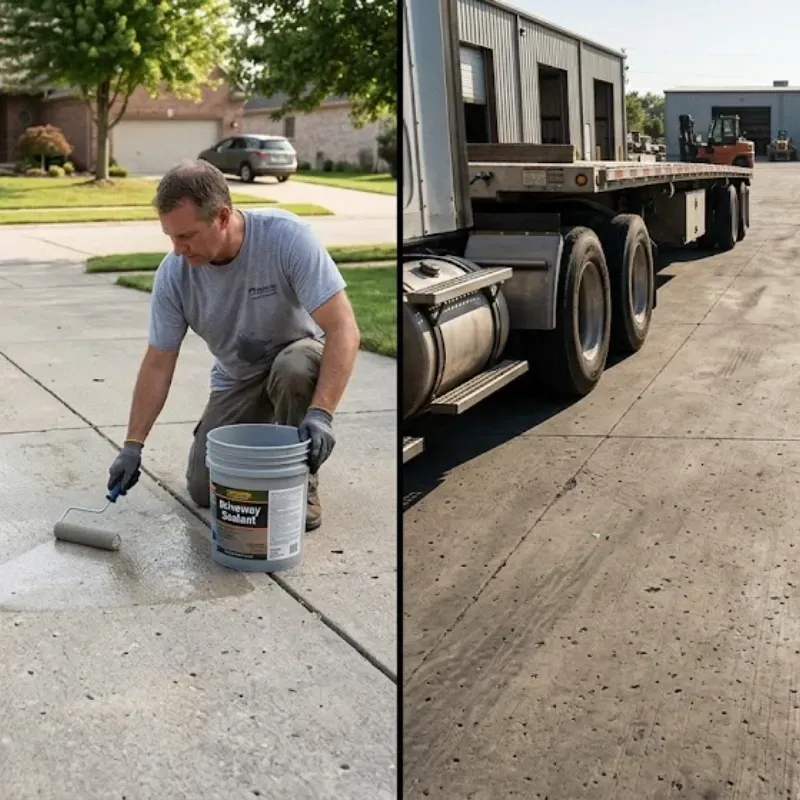
Residential concrete is designed for moderate use and modest maintenance. Sealing and minor repairs extend its life.
Commercial concrete is built for long service life under abuse. The upfront cost is higher, but the long-term maintenance cost is lower when properly designed.
In practice, trying to save money by using residential standards on a commercial project almost always increases lifetime cost.
Check out the importance of proper concrete sealing in Baton Rouge to learn more on how to extend concrete lifespan and reduce maintenance costs over time.
Local Baton Rouge Factors That Matter
Baton Rouge presents unique challenges.
High rainfall, high humidity, and expansive soils all increase cracking risk. Commercial slabs often require better moisture barriers, vapor control, and drainage design than residential projects.
NOAA rainfall data for Baton Rouge confirms that Baton Rouge experiences over 60 inches of rainfall annually, which directly affects curing and subgrade moisture. These conditions make proper sequencing, curing, and moisture control more important here than in drier regions.
Smarter Decisions Before You Pour
The smartest decision property owners can make is matching the design to the use.
Residential standards belong in residential work. Commercial standards belong in commercial work. Mixing them leads to early failure, inspection issues, and unnecessary repairs.
Based on decades of observation, most concrete problems begin before the truck arrives. They start with design assumptions that do not match real-world use.
Final Takeaway
Residential and commercial concrete are not interchangeable. They differ in load design, mix strength, subgrade preparation, reinforcement strategy, finishing tolerances, and inspection requirements.
In Baton Rouge, local soil and climate make those differences even more important.
If you are planning a project, the right next step is confirming that your design standards match your actual use case. A well-informed owner avoids most concrete failures before they ever happen. Contact a professional concrete contractor to ensure your concrete projects are built to last.