Industrial Concrete Flooring Options for Baton Rouge Warehouses and Facilities
Commercial Build Insight
The best industrial concrete flooring for Baton Rouge warehouses depends on traffic type, chemical exposure, moisture conditions, and slab quality rather than upfront cost alone. Matching polished concrete, epoxy, or urethane cement to real operational demands ensures better durability, lower maintenance, and stronger long-term facility performance.
A warehouse floor is the silent workhorse of any facility, carrying the weight of every pallet, forklift, and deadline without ever asking for attention. In Baton Rouge, where humidity hangs in the air like a second layer of pressure, the wrong flooring choice can quietly turn that workhorse into the weakest point in the entire operation. The performance standards behind
commercial concrete work in Baton Rouge reflect the level of planning industrial facilities should apply when choosing flooring systems for local warehouses. The real question is which flooring system is built to withstand constant wheel traffic, moisture exposure, and the relentless pace of daily warehouse use without compromising long-term efficiency.
Why Industrial Flooring Selection Matters in Baton Rouge
Warehouse and facility floors in Baton Rouge face a different level of punishment than ordinary commercial slabs. Constant pallet movement, point loads from racking systems, heavy wheel traffic, cleaning chemicals, and Louisiana humidity all place continuous stress on the concrete surface.
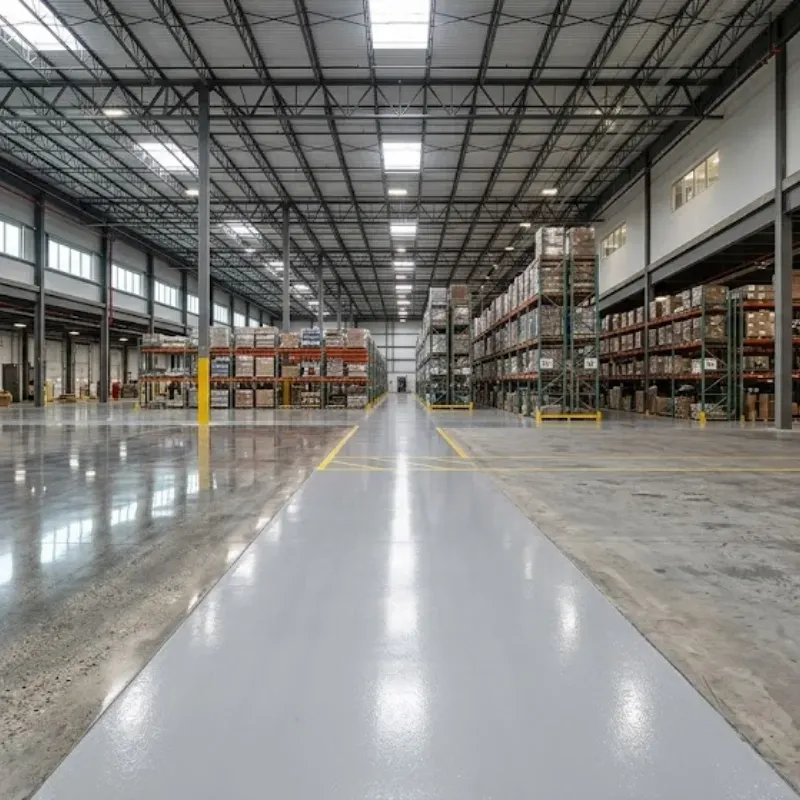
This is why flooring selection should never be treated as a cosmetic finish decision. In South Louisiana, moisture migration, heat cycles, and occasional flood-related humidity spikes can accelerate surface wear, coating delamination, and joint deterioration if the wrong system is used.
In our work across Baton Rouge and surrounding industrial corridors, the flooring systems that fail fastest are often the ones selected based on upfront cost alone. The short-term savings disappear quickly when dusting, spalling, surface abrasion, or coating breakdown interrupts warehouse operations.
The smarter approach is to match the floor system to the facility’s operational abuse level and environmental conditions.
What Our Commercial Concrete Experts Evaluate First
Before recommending any industrial floor finish, our commercial concrete experts start by evaluating the actual use case of the warehouse.
A distribution center with nonstop forklift traffic has completely different performance needs than a food storage facility, light manufacturing space, or equipment maintenance building. The slab surface, reinforcement approach, and finish system all need to reflect that reality.
The first questions that matter are practical:
- Will the floor carry hard-wheel forklifts or pneumatic tires?
- Are oils, solvents, or chemical washdowns involved?
- Will the facility require polished reflectivity for lighting efficiency?
- Is moisture vapor transmission a known issue?
- Will slab joints be exposed to repetitive wheel impact?
These decisions influence whether the best solution is polished concrete, epoxy coating systems, densified hard-trowel slabs, urethane cement, or high-build industrial resurfacing.
We have seen facilities overspend on coatings they did not need, while others underbuilt with a standard sealed slab that deteriorated under daily logistics use. Understanding the differences between residential and commercial concrete helps clarify why those mismatches happen.
The Best Flooring Options for Baton Rouge Warehouses
Polished Concrete for High-Traffic Distribution Spaces
For warehouses focused on forklift movement, long aisle visibility, and lower maintenance, polished concrete is usually the most practical long-term option.
It performs especially well in Baton Rouge logistics spaces because it resists dusting, improves light reflectivity, and reduces maintenance compared to applied coatings. Densifiers strengthen the wear surface, making it ideal for repeated wheel traffic.
The tradeoff is that polished concrete requires a strong slab underneath. Weak finishing, poor curing, or excessive surface laitance will limit the quality of the final polish.
Epoxy Systems for Chemical Resistance
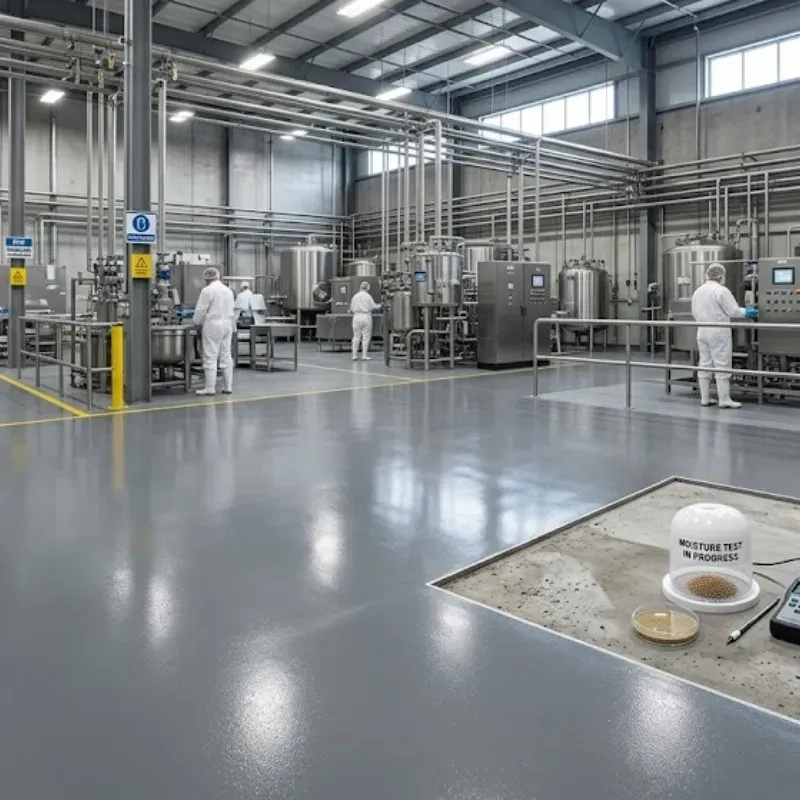
For industrial facilities exposed to oils, chemicals, or frequent sanitation cycles, epoxy systems remain one of the strongest options.
They provide excellent stain resistance and create a more seamless cleanable surface, which is especially valuable in processing, packaging, and controlled warehouse environments.
The common mistake is applying epoxy over a slab that still has moisture vapor issues. Baton Rouge humidity and groundwater conditions make moisture testing critical before installation. Otherwise, blistering and delamination become likely.
Urethane Cement for Thermal and Impact Abuse
Where facilities deal with heat, washdowns, and dropped equipment, urethane cement outperforms many standard coatings.
This option is particularly effective in Baton Rouge because the region’s humidity and temperature shifts can be hard on rigid surface systems. Urethane’s flexibility and thermal shock resistance make it a strong fit for food and beverage facilities or wet industrial zones.
But long-term performance does not come from materials alone. It also depends on recognizing the qualities to look for in a concrete contractor.
Common Mistakes That Shorten Floor Life
Most industrial floor failures are preventable.
One of the biggest mistakes is choosing the finish before understanding the slab condition. Surface preparation, vapor testing, and joint repair often matter more than the coating or polish selected.
Another common issue is ignoring Baton Rouge moisture conditions. South Louisiana’s humidity and occasional groundwater pressure can create vapor transmission that destroys coatings from below.
We have also seen facilities underestimate wheel traffic impact at joints. Hard-wheel forklifts repeatedly crossing poorly detailed joints can create edge spalling faster than general slab wear.
The smarter decision is to assess the full system: slab strength, moisture behavior, joint layout, traffic type, and maintenance expectations.
Why Baton Rouge Requires a Different Flooring Strategy
Advice copied from dry-climate warehouse markets rarely works well in Baton Rouge.
Louisiana facilities deal with high ambient humidity, frequent rain events, occasional flood exposure, and soils that can retain moisture for long periods. These regional conditions directly affect slab drying, coating adhesion, and long-term joint stability.
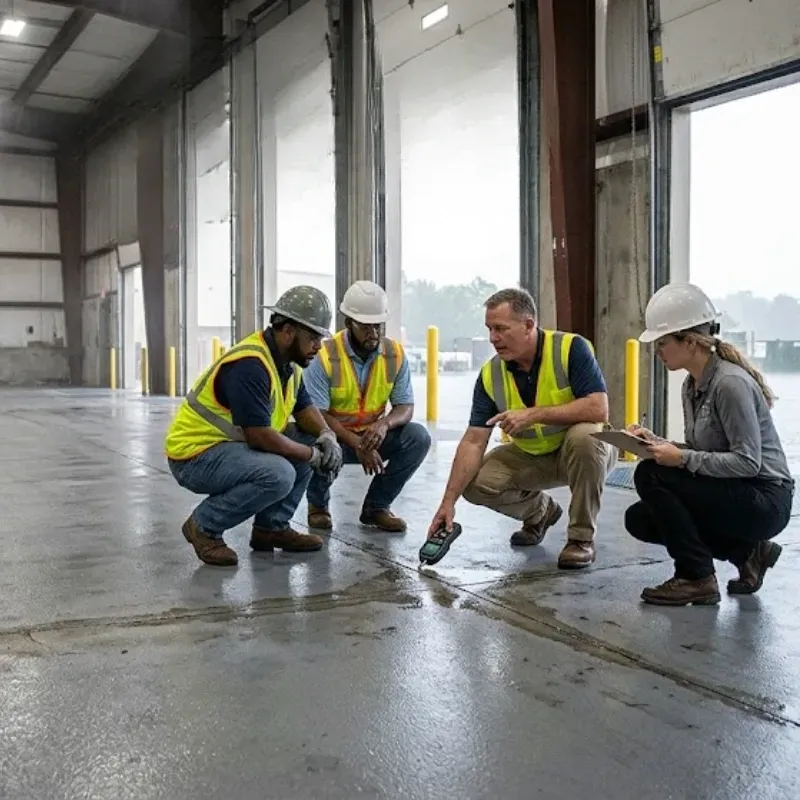
This is why flooring systems that perform well in Phoenix or Denver may underperform in Baton Rouge. Local climate and operational use must shape the recommendation.
Facility owners who account for these regional realities usually make stronger long-term flooring decisions.
Final Takeaway
For Baton Rouge warehouses and facilities, the best flooring option depends on how the space truly operates, not on which finish has the best sales pitch.
Polished concrete is often the strongest choice for logistics-heavy spaces, epoxy excels where chemical resistance matters, and urethane cement performs best in wet, high-abuse environments. The real advantage comes from matching the system to local moisture conditions, traffic type, and slab quality.
The best next step is to evaluate the warehouse’s daily operational stress, Baton Rouge climate exposure, and slab moisture profile before choosing a finish. That is what gives facility owners confidence that the floor will support operations for the long haul.