Smart Project Sequencing for Concrete That Stands the Test of Time in Baton Rouge
Core Insight:
Concrete durability in Baton Rouge depends heavily on proper project sequencing, where each phase from soil preparation to curing is executed in the correct order. Aligning construction steps with local climate and soil conditions prevents cracking, settling, and premature failure while ensuring long-lasting performance.
Ever notice how everyone in Baton Rouge suddenly becomes a concrete expert the moment a patio needs pouring? You’ll hear things like “Just throw some gravel down" or “Concrete is concrete, right? ” as if long-lasting slabs magically appear out of thin air. But here’s the real question: is concrete actually failing because of bad luck or because the project was sequenced like a rushed gumbo recipe?
That is why for
concrete contractors in Baton Rouge, project sequencing is not a small detail. It is the deciding factor between concrete that survives Baton Rouge’s wild environmental mood swings and concrete that becomes a repair job waiting to happen.
Why Baton Rouge Requires Smarter Sequencing Than Most Cities
Concrete construction is always sensitive to its environment, but Baton Rouge raises the stakes. The combination of clay-heavy soils, high groundwater, extreme humidity, and seasonal storms means that any disruption or mistake in the order of operations creates structural vulnerabilities.
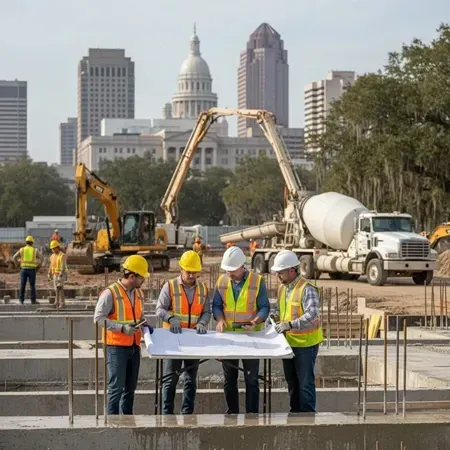
When contractors rush or skip steps, the concrete may cure unevenly, shift after installation, or crack due to moisture imbalance beneath the slab.
According to
commercial concrete services in Baton Rouge, good sequencing acknowledges these factors instead of fighting against them. It aligns soil preparation, reinforcement, forming, pouring, and curing with the local climate and ground conditions. It is the difference between concrete that merely exists and concrete that performs.
Step One: Correct Soil Preparation
Many people think soil preparation simply means removing grass and leveling the ground. In Baton Rouge, that is not nearly enough. Clay soils hold water and expand, while sandy patches can shift under pressure. A proper sequence begins with understanding what the soil is capable of supporting.
The smartest projects start with testing and evaluating the soil, then building the base layer with precision. Compaction must be uniform, and moisture levels need to be controlled before any forms are placed. Rushing through this stage is one of the most common causes of premature slab failure. Without the right base, the rest of the sequence collapses, no matter how well the concrete is poured.
Project size impacts every decision in concrete work. Explore residential vs. commercial concrete projects to learn more on how experienced contractors tailor their approach for both small and large projects.
Step Two: Reinforcement Before Formwork
Poor sequencing often leads to situations where contractors place forms first and try to force reinforcement to fit afterward. This backwards approach weakens the structural integrity of the slab. Reinforcement should drive form layout, not the other way around.
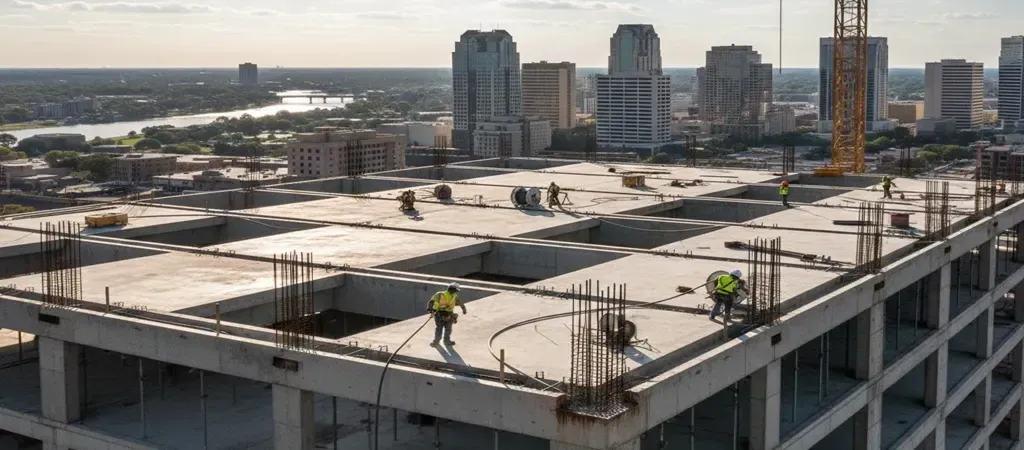
Smart sequencing calls for reinforcement to be planned, measured, and installed while the forms are still adjustable. The choice between rebar and mesh, the spacing, and the depth placement all need to be determined before any wood touches the ground. When reinforcement dictates the structure, the slab gains strength, load distribution, and long-term stability.
Understanding how reinforcement strengthens concrete is key to building durable structures. Learn more about why reinforced concrete matters.
Step Three: Coordinated Pour Timing
Humidity affects curing speed, afternoon storms can ruin fresh concrete, and high temperatures accelerate water evaporation. Smart sequencing evaluates weather patterns and environmental conditions before choosing a pour window.
Contractors who rely on “we’ll figure it out when we get there” thinking often end up with weak surfaces, early cracking, or uneven curing. A planned sequence, on the other hand, chooses pour times strategically, adjusts mixes if needed, and prepares the site for sudden weather changes. This eliminates unpredictable curing issues and produces a uniform finish.
Step Four: Controlled Finishing
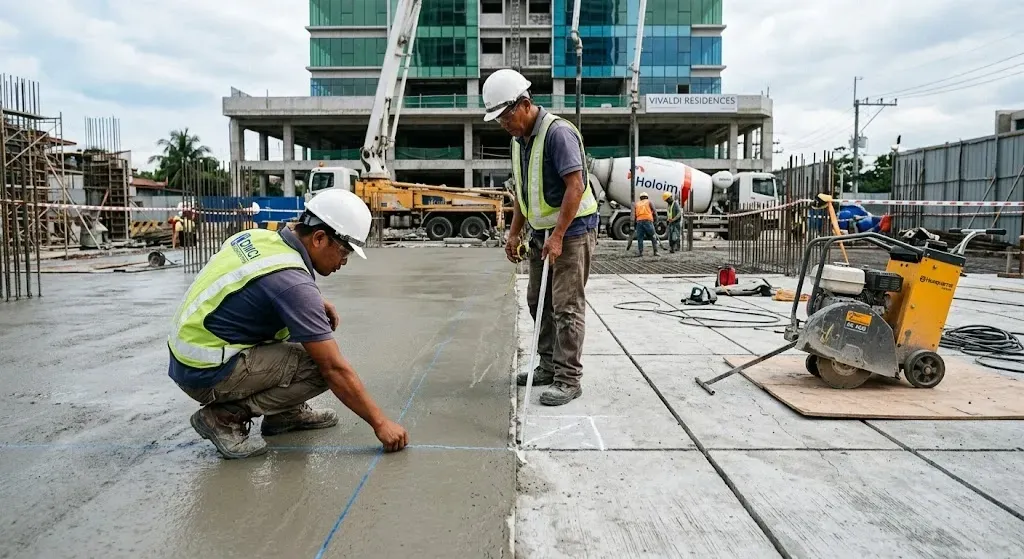
One of the most common mistakes in concrete work is overworking the surface. This happens when the finishing stage is rushed or mistimed. Excessive troweling traps water or brings too much water to the surface, risking scaling and flaking later.
Sequencing solves this by aligning finishing steps with real-time conditions. The crew must know when to begin, when to pause, and when to execute the next phase. Baton Rouge’s humidity means the curing process behaves differently than in dry climates. Those who follow strict sequencing guidelines avoid cosmetic flaws and structural weaknesses caused by premature finishing decisions.
Step Five: Proper Curing and Set-Time Management
Curing is not a passive stage. It is an active part of the sequence that determines how strong the concrete becomes. Baton Rouge’s climate makes curing tricky because moisture can evaporate quickly in high heat or linger too long in humid conditions.
Smart project sequencing includes controlled curing methods such as covering, hydration management, and adjusted timelines. When curing is integrated into the sequence and not treated as an afterthought, the concrete gains its full strength and resists long-term wear.
Why Smart Sequencing Prevents Most Concrete Problems
Almost every major concrete issue in Baton Rouge originates from poor sequencing: cracking from weak base prep, sinking from improper compaction, uneven surfaces from rushed finishing, or damage from unexpected rain. Good materials and skilled finishing cannot compensate for a bad order of operations.
Smart sequencing eliminates these risks by establishing a predictable, controlled workflow. It ensures that each stage supports the next and that no shortcuts are taken. This approach produces concrete that lasts longer, handles temperature changes better, and resists structural movement.
Avoiding key errors is critical for durable, safe concrete. Learn more about concrete project mistakes to avoid and how to steer clear of them.
Residential and Commercial Projects Both Benefit From Sequencing
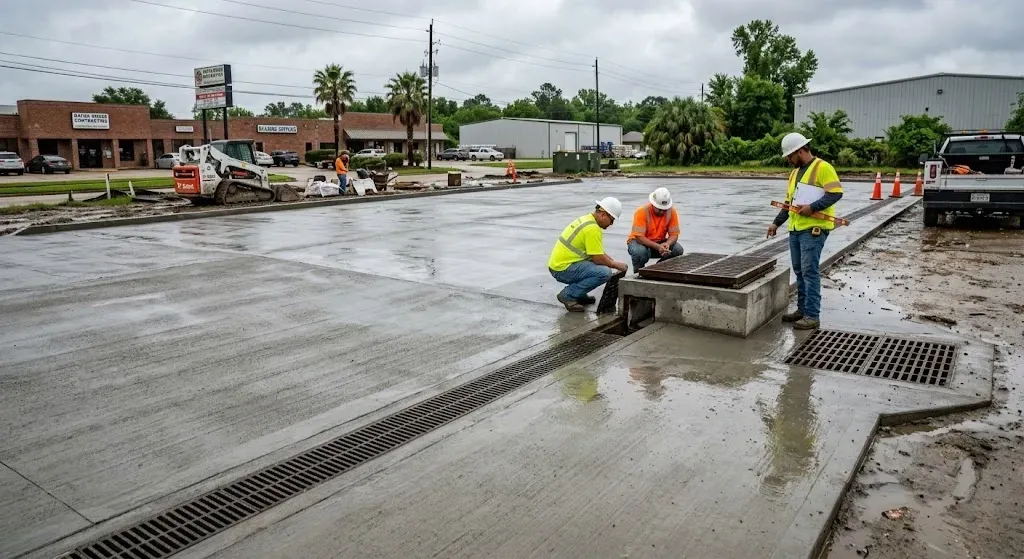
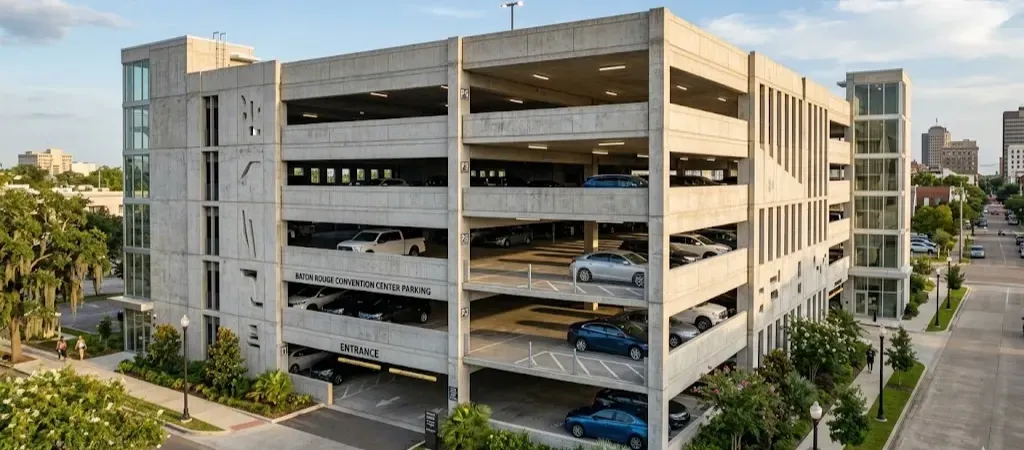
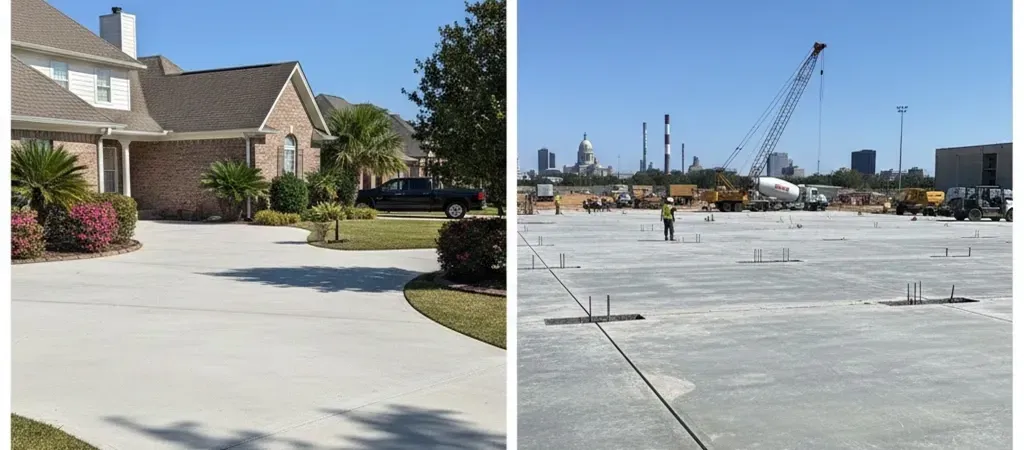
Whether it is a driveway in Shenandoah, a backyard patio in Mid City, a restaurant addition off Airline Highway, or a large commercial slab, the same rules apply. Residential projects fail when sequencing is ignored, and commercial projects become far more expensive to repair when poor sequencing creates structural issues.
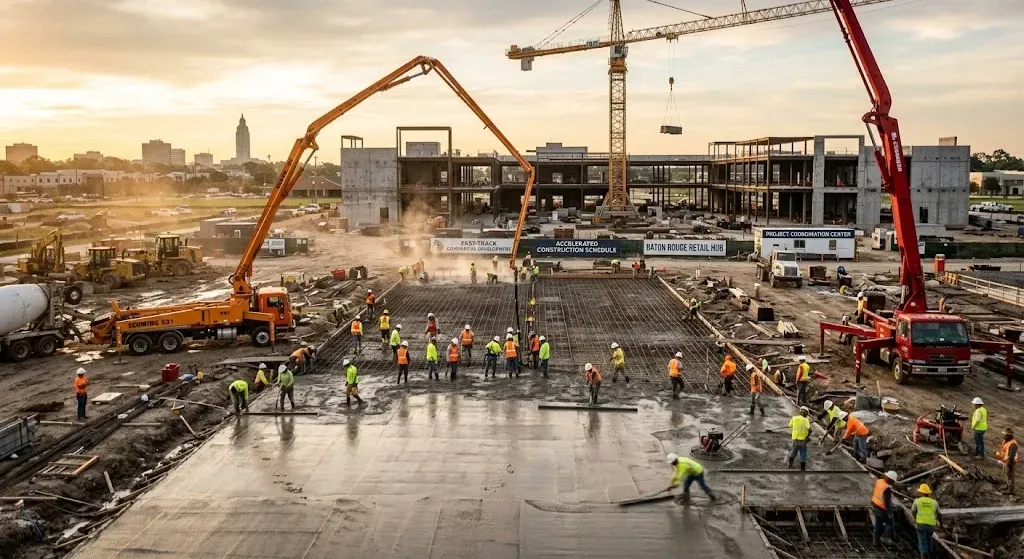
Large foundations rely heavily on sequencing because of the amount of reinforcement, compaction, and curing involved. Even small patios depend on sequencing because the soil beneath them behaves unpredictably. Scale does not change the importance of order. If anything, larger projects amplify the consequences of mistakes.
The Baton Rouge Climate Demands Respect and Planning
Smart sequencing is not just about following a checklist. It is about respecting the environment in which the concrete is built. Baton Rouge’s climate punishes rushed work and rewards careful planning. Every step must be aligned with the realities of heat, moisture, and soil behavior.
This is why the order of operations directly influences durability. Those who understand sequencing build concrete that survives decades of weather. Those who ignore it often find themselves repairing or replacing slabs far sooner than expected.
Smart Sequencing Is the Key to Longevity
The idea that concrete durability comes from thickness or appearance misses the true foundation of long-lasting work. Longevity comes from the order in which the project is executed. Soil must be prepared correctly. Reinforcement must be placed with precision. Pour timing must be strategic. Finishing must be controlled. Curing must be intentional.
When the sequence is correct, the concrete performs. When the sequence is wrong, the concrete fails. There is no mystery behind it. In a region like Baton Rouge, smart sequencing is not just best practice. It is the defining factor behind concrete that truly stands the test of time.